








































Myorelaxant Splint: Precision and Control in the Digital Workflow with Exocad DentalCAD
📊 Quick Technical Summary
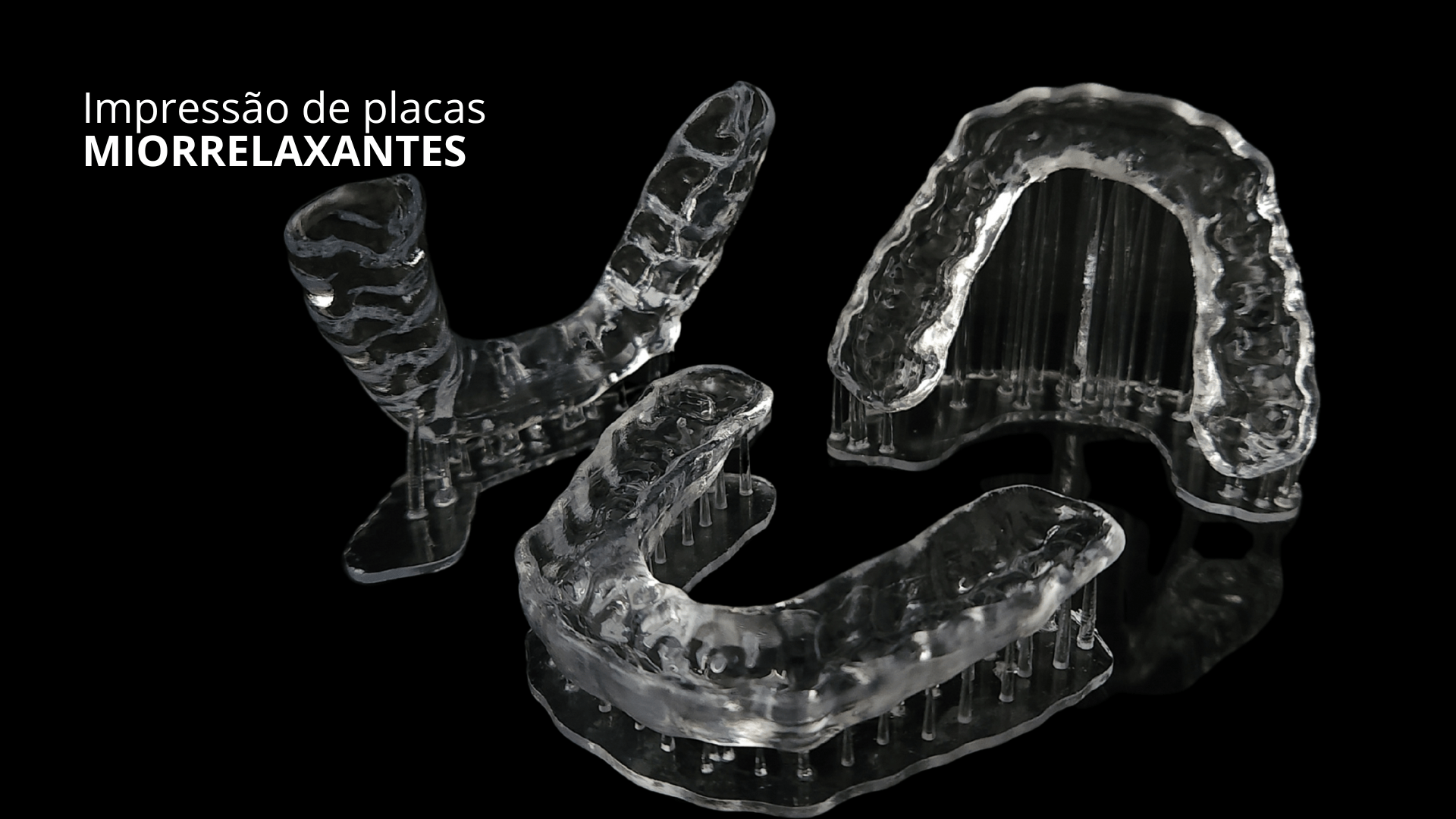
The fabrication of myorelaxant splints in Exocad DentalCAD optimizes the workflow, allowing precise control of the insertion path, retention relief, and surface smoothing, critical aspects for ideal clinical adaptation. Integration with 3D printing with specific 3D resins ensures predictability and patient comfort.
- Internal Gap: 0.05 - 0.06 mm (50-60 micrometers)
- Internal Smoothing: ~25%
- Minimum Thickness: 1 mm (for 3D printing)
- Application: 3D printed myorelaxant splints
In the daily routine of clinics and laboratories, the struggle for a myorelaxant splint that adapts perfectly and brings comfort to the patient is constant. How many times has the time spent on chairside adjustments been longer than expected? Or the wait for rework on a case that didn't fit as it should? The insecurity about the retention or the perfect fit of the piece is a hidden cost that affects both the professional and the patient. The truth is that every extra minute in adjustment means a tighter schedule and, often, a smaller profit margin. It is not just a technical issue, but a reality that directly impacts the routine of those who seek to deliver excellence.
This incessant search for precision, for a result that requires minimal manual intervention, is what drives the evolution of processes. We know that the expectation is always the same: a piece that fits like a glove, without excessive tightness or unwanted gaps. It is the difference between a satisfied patient who returns and refers, and one who questions the effectiveness of the treatment. And the truth is that, with the right tools, this reality can be much more predictable.
The Reality of Digital Splint Design
When starting the design of a myorelaxant splint, defining the internal surface is one of the most critical points. It is where the secrets of adaptation lie. Where will the splint press? Where will it retain? Where does it need to be relieved for patient comfort? These are questions that, if not answered correctly in the planning, will result in future headaches. The software needs to be an ally in this process, not another obstacle.
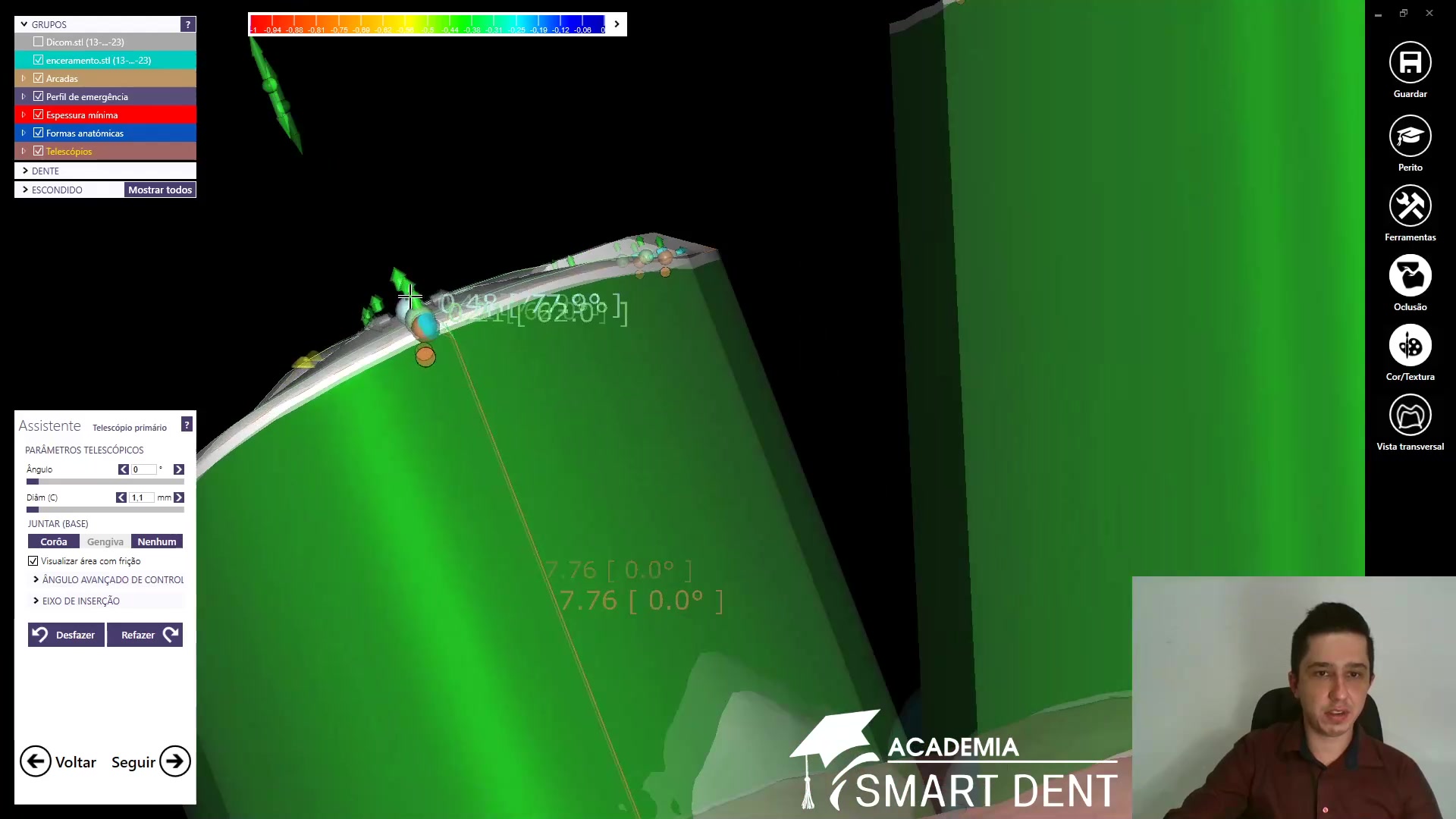
The insertion path, for example, is a detail that makes all the difference. The program automatically indicates the retention areas. But our experience tells us that the initial suggestion is not always ideal. It is necessary to evaluate, with a clinical eye, whether the regions pointed out as retentive really are, and whether the program is relieving where it needs to relieve, without exaggeration. Excessive relief results in a splint that does not fix; insufficient relief, in a painful piece for the patient.
Parameters such as internal gap, which defines the space between the splint and the anatomy, are crucial. A margin of 50 to 60 micrometers (0.05 to 0.06 mm) generally works well, but it is an average. The particularities of each case, the surface of the teeth, the 3D printing equipment, and the 3D resin used may require small adjustments. The smoothing of the internal surface also directly impacts adaptation, and a setting of 25% is usually a good starting point, balancing anatomical copy with comfort.
And the minimum thickness? For a printed splint, 1 millimeter is a safe limit to avoid fragility during 3D printing and daily use. These details, sometimes underestimated, are what guarantee the longevity and functionality of the myorelaxant splint.
The Logic Behind the Solution: Exocad DentalCAD
Given these challenges and the need for control, Exocad DentalCAD software emerges as a tool that fits this demand. It offers the resources to manipulate these critical parameters, from defining the insertion path to fine-tuning the gap and smoothing. Where there was once uncertainty, there is now digital control that allows predicting and adjusting the behavior of the splint even before it is printed.
The ability to visualize retention areas, adjust relief, and define minimum thickness, all within the digital environment, transforms the process. Exocad DentalCAD, in this context, is not just a program, but an extension of the professional's ability to deliver work with greater precision and fewer reworks. It allows clinical logic to translate into a digital design that respects the particularities of each patient.
When working with Exocad DentalCAD, the free sculpting and occlusal contact adjustment stage also gains agility. Anatomical movement and smoothing tools allow refining the design, whether to create an anterior guide or to flatten posterior areas, ensuring balanced and functional occlusion. Control over every millimeter of the piece is essential, and the software facilitates this complex task.
For the success of 3D printing the splint, the choice of 3D resin is fundamental. The Smart Print Bio Bite Splint Flex 3D Resin, for example, is developed specifically for myorelaxant splints, ensuring flexibility and resistance. Its biocompatibility and certifications make it a safe and effective option for direct use in the patient's mouth. Choosing the right 3D resin complements digital planning, ensuring that the final result is faithful to the design.
For the post-curing stage, equipment such as the ASIGA Cure or the ShapeCure D are indispensable. They ensure complete polymerization of the 3D resin, giving the splint the necessary mechanical properties and biocompatibility. The integration of robust design software with 3D printers and quality UV post-curing units is what closes the cycle of an efficient and safe digital workflow.
Integration of Exocad into Clinical and Laboratory Routine
Practical experience shows that the ability of Exocad DentalCAD to simplify the fabrication of myorelaxant splints is remarkable. Those who use it report a significant reduction in chairside adjustment time. The ability to precisely define gap, retention, and smoothing parameters, such as 50-60 micrometers of gap and 25% smoothing, means that the splint comes out of the 3D printer much closer to ideal.
Attention to the insertion path, evaluation of retentive areas, and allowing retention to ensure splint fixation are decisions that, when made in the digital environment, prevent rework. The ability to sculpt anterior or canine guides with precision, even without a virtual articulator, proves that the software adapts to different work philosophies, delivering consistent results.
It is clarity, it is security in investment and predictable financial return.
Conscious and Professional Decisions
The choice for a digital workflow in the fabrication of myorelaxant splints is not just a matter of modernity, but of strategy. It is the pursuit of a more predictable result, with fewer adjustments and greater patient satisfaction. The tool is not the end, but the means to achieve a superior level of quality.
The focus on parameters such as internal gap, smoothing, and minimum thickness, combined with a careful analysis of retentions, transforms the process. The use of software like Exocad DentalCAD, integrated with efficient 3D printers and UV post-curing units, allows the professional to make safer decisions, based on data and control. It is the certainty that the printed splint will have the expected adaptation, optimizing time and ensuring the patient's occlusal health.
[[AUTHOR_SIGNATURE]]