







TPO in 3D Dentistry: Scientific Evidence and Safety of Use
TPO (Triphenylphosphine Oxide) is a photoinitiator widely used in dental resins for 3D printing. Whether for crowns, prostheses, or splints, its presence is almost universal in current formulations. This component is not new, having been intensively studied and used for decades in various medical and dental products.
Thanks to this robust history, there is a significant volume of scientific research that attests to the safety of TPO, provided it is used correctly and in processes that ensure complete curing of the material. During 3D printing and post-curing, TPO is consumed in the chemical reaction, resulting in minimal, often undetectable, traces in the final product. [1], [2], [3].
1) The Curing Process with TPO
During UV curing, TPO absorbs light, fragments (a process known as 'cleavage'), and initiates the reaction that converts monomers and oligomers into a solid polymeric network. In well-executed processes, TPO is almost entirely consumed, leaving only minimal traces or by-products trapped in the matrix.
However, if curing is incomplete, TPO residues may be higher, which reinforces the importance of a rigorous post-curing protocol.
2) What Recent Science Shows in Practice (Safety of Use)
Recent studies with dental resins (including 3D printed ones for splints) use advanced techniques such as LC-MS/MS to measure residual TPO and perform toxicological evaluations. The results demonstrate that extracted levels and the safety margin are acceptable when the washing and post-curing protocol is adequate. [4]
Furthermore, post-curing with adequate light and temperature increases the degree of conversion and reduces elution/cytotoxicity — a principle we apply by combining UV and heating. [5]
3) Regulatory Aspects of TPO
In the European Union, TPO has been included in a list of substances that require attention and control, due to its potential toxicity in large quantities when present in free form. However, this does not imply a prohibition of the final product.
In practice, this classification merely indicates the need for monitoring the substance. REACH rules are only triggered if the free amount of TPO in the product exceeds 0.1%, a value significantly higher than that found in correctly processed parts.
In the US, the FDA does not regulate TPO in isolation. The agency evaluates the final device through ISO 10993-1, which covers chemical characterization, toxicological evaluation, and biocompatibility. If extractable levels are low and the risk analysis is robust, use is considered acceptable. [6]
Smart Dent's Position: Claims and Proofs
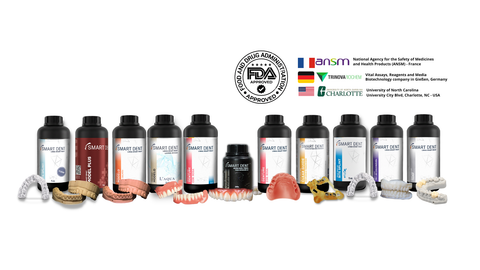
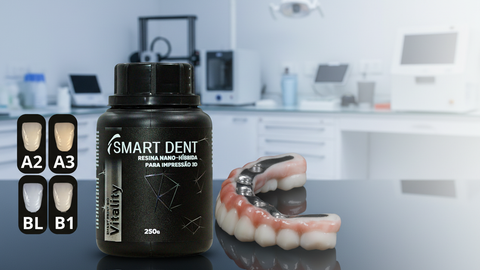
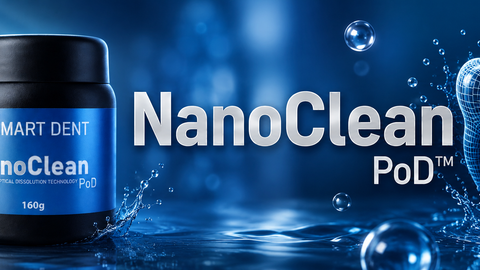
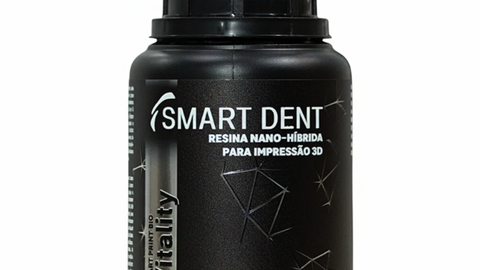
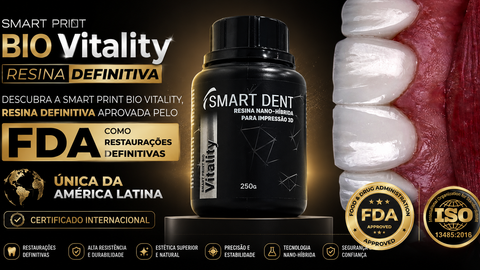
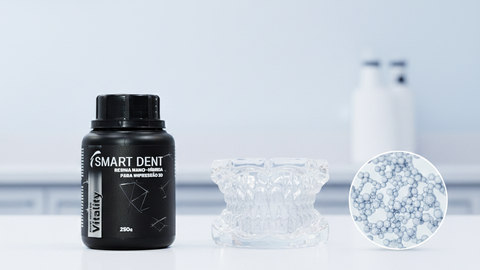
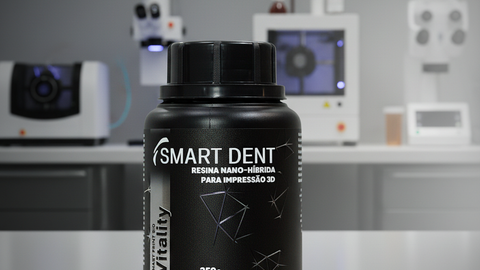
At Smart Dent, we rigorously validate our processes, which include 3D printing, washing with alcohol-substitute solutions (such as NanoClean PoD™), and adequate post-curing. This protocol aims to demonstrate a high degree of conversion (DC) and reduction of extractables. Our resins like Vitality have been approved in Cytotoxicity, Mutagenesis, and Biocompatibility tests, in addition to all examinations that ensure their safe use through the correct process.
Evidence-Based Argumentation
Currently, practically all resins used in dentistry for 3D printing employ TPO. However, the photoinitiator is consumed during curing by photochemical cleavage. In correctly printed, washed, and post-cured parts, the measured residual traces remain low and within the safety margins established in the literature. We follow a validated post-processing protocol precisely because it increases the degree of conversion and reduces extractables. We comply with ISO 10993 for the final device and monitor REACH (EU) compliance, remembering that the hazard classification of TPO does not imply a ban on the cured device, but rather risk management and transparency.
Bibliographic References
- [1] Topa-Skwarczyńska M, Petko F, Krok-Janiszewska D, Galek M, Ortyl J. High-performance new photoinitiators for the preparation of functional photocurable polymer composites. Eur Polym J. 2023;196:112282. doi:10.1016/j.eurpolymj.2023.112282. researchgate.net ↗
- [2] Kowalska A, Sokołowski J, Bociong K. The photoinitiators used in resin based dental composite—a review and future perspectives. Polymers. 2021;13(3):470. PMID: 33540697; PMCID: PMC7867280. pmc.ncbi.nlm.nih.gov ↗
- [3] Kim GT, Go HB, Yu JH, Yang SY, Kim KM, Choi SH, Kwon JS. Cytotoxicity, colour stability and dimensional accuracy of 3D printing resin with three different photoinitiators. Polymers. 2022;14(5):979. PMID: 35267799; PMCID: PMC8912826. pmc.ncbi.nlm.nih.gov ↗
- [4] Messer-Hannemann P, Wienhold M, Esbak H, Brunner A, Schönebaum A, Schwendicke F, Effenberger S. Residual TPO content of photopolymerized additively manufactured dental occlusal splint materials. Biomedicines. 2025;13(1):44. doi:10.3390/biomedicines13010044. View Study (PubMed) ↗
- [5] Karademir SA, Atasoy S, Akarsu S, Karaaslan E. Effects of post-curing conditions on degree of conversion, microhardness, and stainability of 3D printed permanent resins. BMC Oral Health. 2025;25:304. doi:10.1186/s12903-025-05491-5. pmc.ncbi.nlm.nih.gov ↗
- [6] Turkalj M, Pully D, Li Q, Sun W, Ghosh M, Čokić SM, Vanoirbeek J, Van Meerbeek B, Van Landuyt KL. Monomer elution and cytotoxicity of 3D-printed resin-based composites. Dental Materials. 2025;[Epub ahead of print]. doi:10.1016/j.dental.2025.06.016. View Study (PubMed) ↗

![[COMPARATIVO] - Impressora 3D qual a ideal para chairside print](https://b-vz-004839ee-19a.tv.pandavideo.com.br/8589e7fc-982f-4a12-a303-3f96a31fbee8/thumbnail.jpg)