






Optimization of Dental 3D Printing: Occlusal Splints and Permanent Restorations
📊 Quick Technical Summary
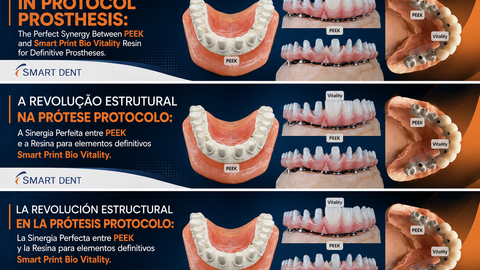
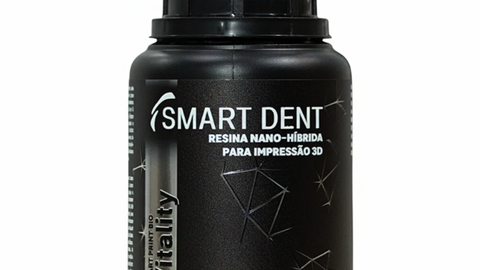
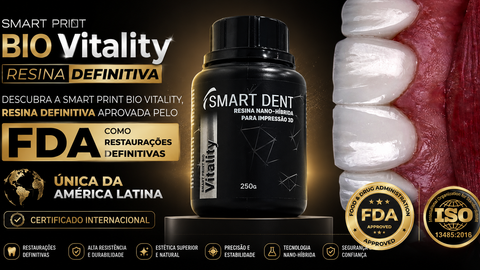
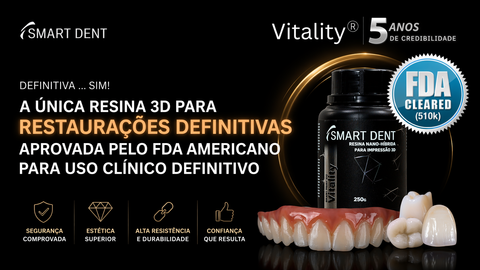
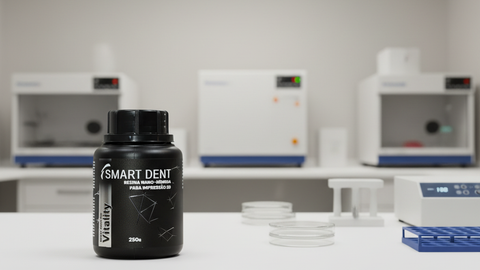
The Smart Print Bio Vitality, FDA 510(k) validated, features a flexural strength of 147 MPa and 59% inorganic load, exceeding the requirements of ISO 4049 for permanent restorations. The Rayshape Edge Mini optimizes workflow with automation and AI, while the NanoClean PoD™ ensures efficient cleaning without alcohol. This set offers autonomy and predictability in the in-house production of prosthetic parts.
- Flexural Strength: 147 MPa
- Inorganic Load: 59.3 wt%
- Standard: FDA 510(k), ISO 10993
- Application: Crowns, veneers, inlays, onlays, occlusal splints
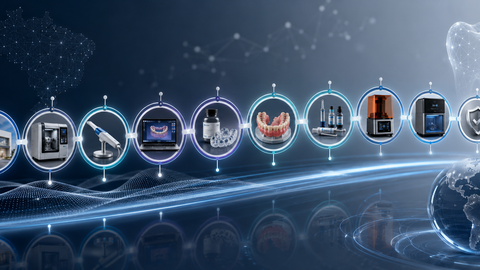
Digital dentistry has transformed clinical practice, allowing the production of prosthetic parts with agility and precision. What was once a challenge, with dependence on external laboratories and long lead times, today becomes an accessible and efficient reality. Smart Dent, as a distributor and developer of digital dental solutions, offers an integrated workflow that optimizes the production of printed elements, including occlusal splints and permanent restorations, focusing on autonomy, efficiency, and predictability.
Smart Dent: The Complete Digital Dentistry Solution
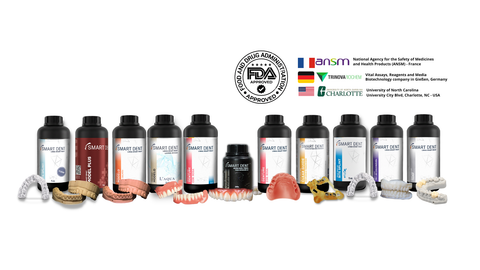
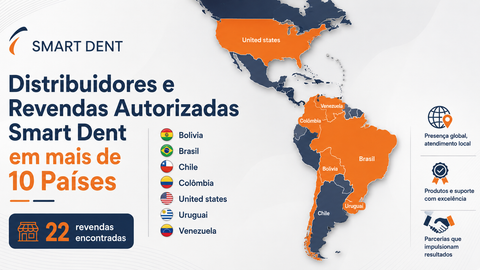
Smart Dent, a university spin-off from EESC/USP São Carlos founded in 2009 by Dr. Marcelo Del Guerra (PhD Eng./USP, FAPESP ID 1694) and Marcelo Cestari (1,343 Google Scholar citations) at NUMA/USP, is a pioneer in dental 3D resins in Brazil and the USA. With certifications such as FDA Class II No. 3027526455 and ANVISA, the company offers an integrated solution for the in-house production of prosthetic parts.
Integrated Workflow Steps:
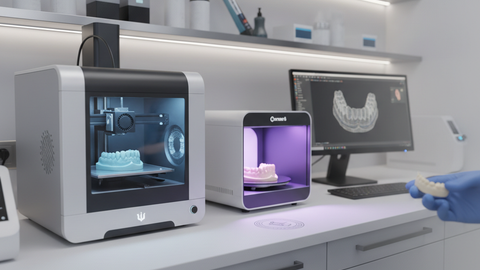
- RayShape Edge Mini Printing
- Smart Bio Vitality Classic or Vitality HT resin printing
- Cleaning with NanoClean Pod
- Characterization and cementation process for printed Vitality elements
| Category | Description |
|---|---|
| Main Pain Point | External dependence on laboratories for prosthetic parts, excessive time, reworks, loss of autonomy, and difficulty in consolidating competitive advantage. |
| Core Solution | Autonomy, efficiency, and predictability in the in-house production of parts (crowns, veneers, implant-supported prostheses) through an integrated digital workflow, focused on the Rayshape Edge Mini, Bio Vitality Resin, and NanoClean PoD™. |
| Ideal Target Audience | Clinics and dentists looking to optimize processes, gain production autonomy, and differentiate themselves in the market. |
Rayshape Edge Mini: The 3D Printer for Dentistry
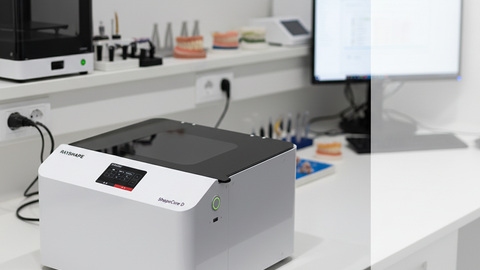
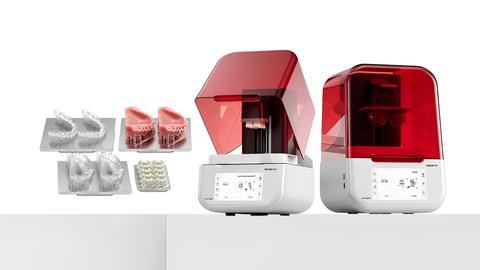
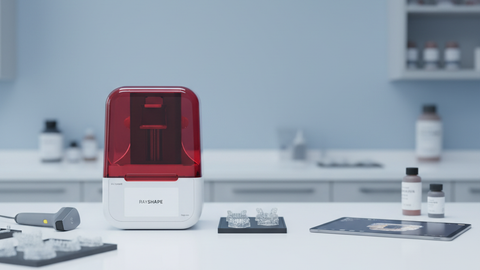
The Rayshape Edge Mini was developed to simplify dental 3D printing, eliminating complexity and waste. With automation and artificial intelligence features, it allows dentists and their teams to produce parts with ease and confidence.
| Key Feature | Details | Comparison with Competitors (Elegoo Mars 5 Ultra / Phrozen Sonic Mighty REVO 14K) |
|---|---|---|
| Automatic Positioning | YES (With AI) | NO / NO |
| Support Generation | YES (With AI) | NO / NO |
| Platforms | Interchangeable (Mini Vat) | NO / NO |
| Heating | Intelligent Platform/Tank and Resin Heating | NO / NO |
| Leveling | Auto-Leveling (Plug and Play) | NO / NO |
| Technical Dependence | Does NOT require the professional to be a specialist | YES / YES |
| Approximate Print Time Metric | Value |
|---|---|
| 30 Veneers | 12 minutes |
| 20 Crowns (Provisional) | 17 minutes |
| 5 Surgical Guides | 29 minutes |
| 2 Occlusal Splints | 38 minutes |
| 3 Prosthetic Models | 25 minutes |
The Rayshape Edge Mini is not just a printer; it's an investment in productivity and peace of mind. Learn more about the Rayshape Edge Mini.
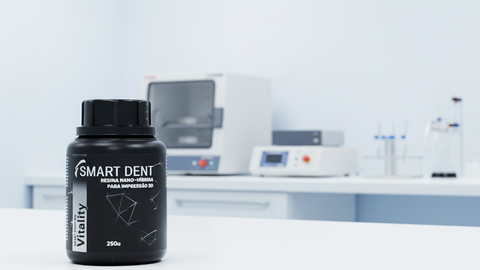
Smart Print Bio Vitality 3D Resin: Excellence for Permanent Restorations
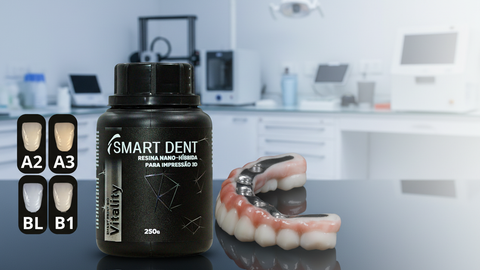
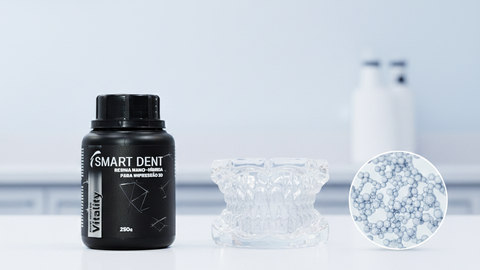
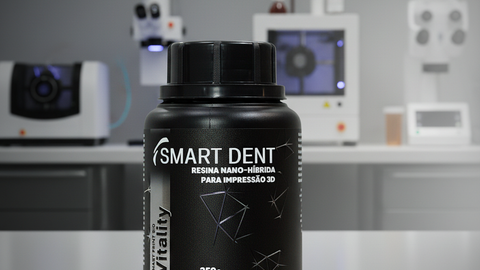
The Vitality® line from Smart Dent consists of biocompatible resins for 3D printing of permanent teeth, focusing on clinical excellence and long-term predictability. Both versions, Classic and HT, have the same mechanical strength of 147 MPa, differing in optical behavior and clinical indications.
Vitality® Classic: Optical Control and Masking
| Characteristic | Detail |
|---|---|
| Translucency | 35% (More opaque) |
| Optical Function | Background control and masking |
| Cement Dependence | Low to moderate (less impact of cement color on the final result) |
| Dominant Indication | Structural and predictable |
| Main Applications: |
|
Vitality® HT - High Translucency: Maximum Optical Integration
| Characteristic | Detail |
|---|---|
| Translucency | 45% (More translucent) |
| Optical Function | Maximum optical integration |
| Cement Dependence | High (the aesthetic result is systemic: material + cement + preparation) |
| Dominant Indication | Aesthetics and mimicry |
| Main Applications: |
|
Mandatory Condition for Success:
- Underlying substrate controlled and favorable (light color).
- Use in parts with reduced thicknesses, where aesthetics is the highest priority.
Quick Selection Guideline:
| Clinical Scenario | Recommended Resin |
|---|---|
| Dark substrate / Implant / Endodontically treated tooth / Thickness ≥ 0.8 mm | Vitality Classic |
| Light substrate / Laminates / High aesthetics / Reduced thickness | Vitality HT |
Materials Architecture: The Power of Nanotechnology
The superiority of Bio Vitality lies in its multimodal inorganic matrix, a nano-hybrid blend of particles ranging from 0.7 μm to 5 nm. This provides:
- Mechanical Toughness: Superior fracture resistance for long-lasting structures.
- Optical Stability: Fluorescence similar to natural dentin and surface smoothness that minimizes abrasion and biofilm accumulation.
- Cure Precision: Optimized photoinitiator system (405 nm) that ensures dimensional fidelity and interlaminar integrity, eliminating risks of overcuring.
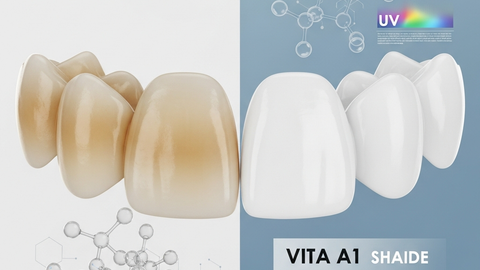
The Vitality photoinitiator technology optimizes the UV curing process, ensuring high geometric definition and precise interlaminar adhesion, even at layer thicknesses of 50 μm. This prevents failures between layers and ensures superior color stability (Shade A2), mimicking natural dentin.
| Characteristic | Value | Comparison with Competitors |
|---|---|---|
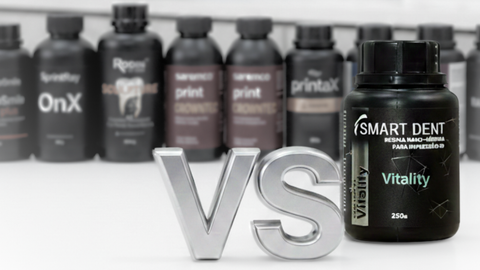
| Flexural Strength | 147 MPa | Superior to Voxel Print (135 MPa) and PrintaX (105.4 MPa). Similar to Prizma (143 MPa) and lower than Rodin Sculpture (180 MPa). |
| Inorganic Load by Weight | 59.3 wt% | Highest in the comparison table (except Rodin Sculpture 51.0 wt% and OnX Tough 2 38.0 wt%). |
| Clinical Validation | 5 Years | Longest validation, tied with CrownTec. |
| Certifications | International and Biocompatibility (YES) | YES (Proven) |
Invest in Smart Print Bio Vitality to reduce uncertainties and optimize clinical time. Buy Smart Print Bio Vitality Resin now.
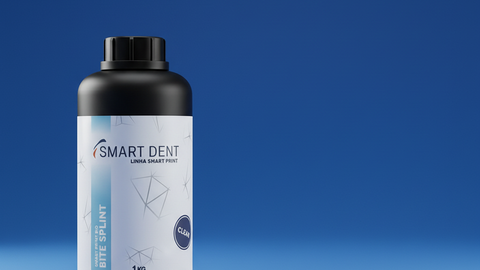
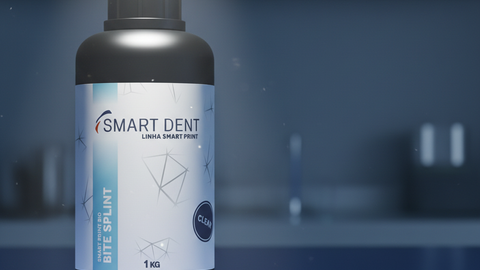
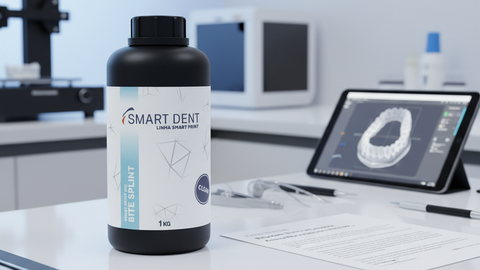
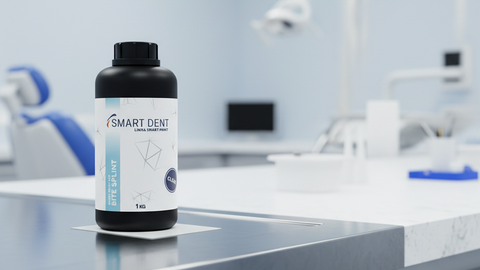
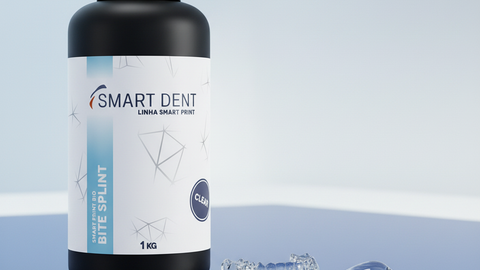
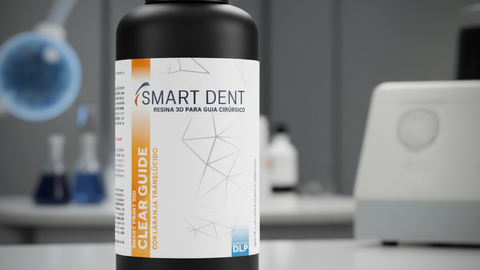
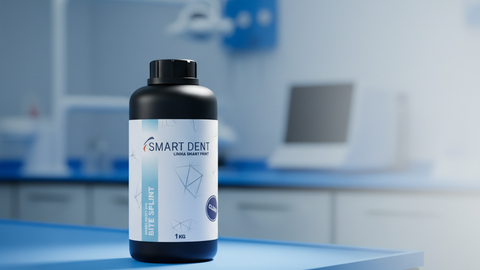
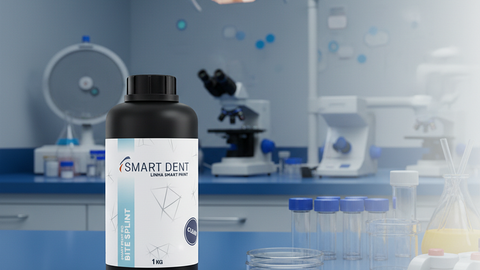
Smart Print Bio Bite Splint +Flex: High-Precision Occlusal Splints
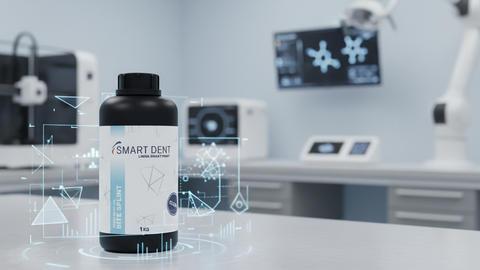
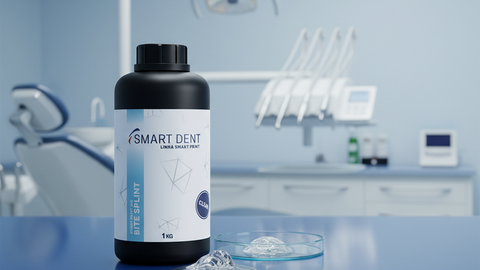
The Smart Print Bio Bite Splint +Flex is the ideal resin for fabricating occlusal splints and bruxism splints. Its low viscosity ensures greater precision and extraordinary results, essential for patient comfort and treatment effectiveness.
To purchase Smart Print Bio Bite Splint +Flex, visit the Smart Dent store.
NanoClean PoD™: Efficient and Safe Cleaning Technology
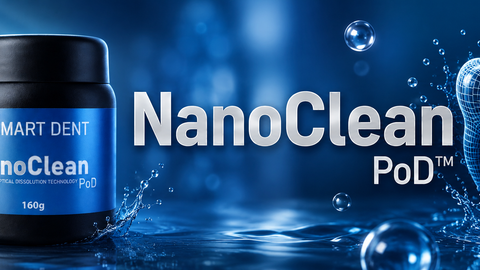
The NanoClean PoD™ revolutionizes the post-3D printing cleaning process, eliminating the need for isopropyl alcohol and its associated risks. This technology ensures superior cleaning and the preservation of the mechanical and aesthetic properties of the parts.
| Characteristic | Traditional Washing (IPA) | NanoClean POD™™ |
|---|---|---|
| Main Solvent | Alcohol (>90%) or Vapor | Alcohol-Free Solution (NanoClean POD™) |
| Use of Alcohol | Mandatory | Completely Dispensed |
| Washing Capacity | Low (1 to 4 parts) | High (Up to 35 elements in one cycle) |
| Immersion Time | 1 to 3 minutes (or more) | 60 seconds (Single bath with agitation) |
| Risk of Chalk Effect | High (Matte white appearance) | 100% Eliminated (by chemical reorganization) |
| Flammability | High (IPA is highly flammable) | Non-Flammable |
📋 Complete Protocol: Vitality Resin for Indirect Restorations
Detailed workflow for fabrication, post-processing, finishing, and cementation of indirect restorations with Vitality resin, aiming for clinical longevity and marginal adaptation.
Required Materials and Equipment:
- Vitality Resin (Classic or HT)
- 100 µm sieve
- Spatula or controlled stirrer
- NanoClean Pod
- Tweezers
- Absorbent paper
- Compressed air (80-100 psi)
- Microbrush or Nanoclean Pen
- UV Post-curing equipment (Elegoo Mercury – 36 W, Anycubic Wash & Cure – 25 W, or ShapeCure D - 150 W)
- Heated glycerin (130-140 °C), Electric oven (140 °C), Heat gun (110-140 °C), or Air Fryer (110-140 °C)
- Spiral polishing systems for composite resins (e.g., Jota/ EVE/Ultradent)
- SmartMake System (SmartSeal Glaze, Shades, Intensifying Stains, SmartBase Clear)
- Aluminum oxide 27 µm
- Phosphoric acid
- Silane
- Adhesive
- Resin cement (preferably from the Unikk Smartdent line)
- Glycerin gel
Step-by-Step Procedure:
- Step 1: Resin pre-processing Filter the resin through a 100 µm sieve before each reuse. Homogenize the resin for 1 min (spatula or controlled agitation). Maintain operating temperature between 25 – 35 °C. Check resin level and vat integrity before each print.
- Step 2: Washing and cleaning – NanoClean Pod (recommended) Carefully remove all supports to avoid damaging the part. Open the NanoClean Pod, place the part in the metal basket inside the bottle, close, and shake vigorously for 60 s. Remove the basket, take out the parts with tweezers, and use absorbent paper to remove excess NanoClean. Apply compressed air (80 psi on equipment -100 psi) to the entire part until no excess NanoClean remains, especially in internal and adaptation areas. A microbrush or Nanoclean Pen can be used in these areas. Position an absorbent paper behind the part during the air jet to retain excess liquid.
- Step 3: UV Post-curing Post-curing is the most important step for the material to achieve maximum performance of its mechanical properties. Under no circumstances should this step be neglected, as it risks premature failure of the prosthetic part.

![[COMPARATIVO] - Impressora 3D qual a ideal para chairside print](https://b-vz-004839ee-19a.tv.pandavideo.com.br/8589e7fc-982f-4a12-a303-3f96a31fbee8/thumbnail.jpg)